
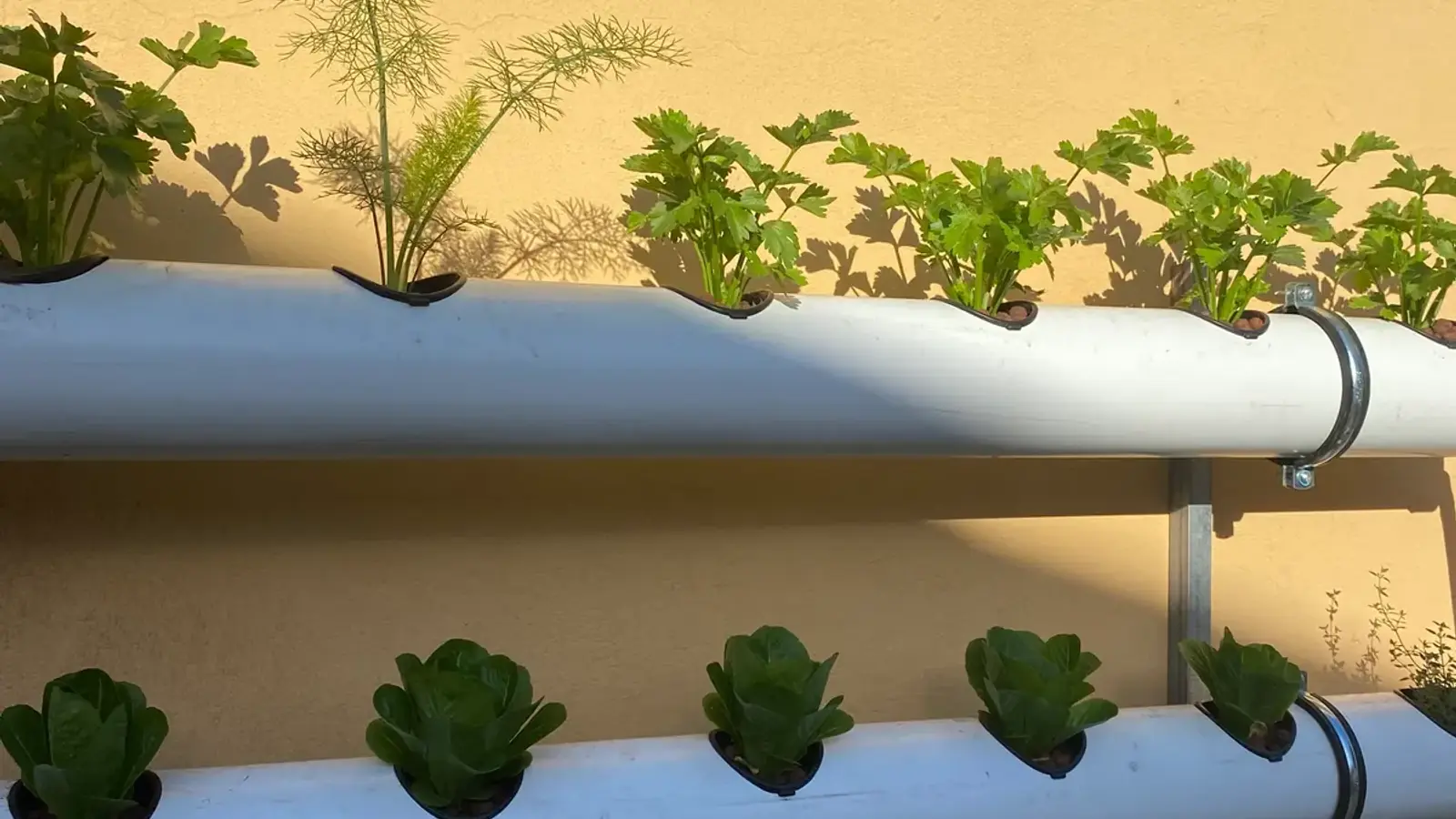
We planted the NFT system on our yard wall on 21 October 2026. Here is how lettuce, celery and dill looked ten days later, what healthy roots look like, and the EC and pH each crop prefers.
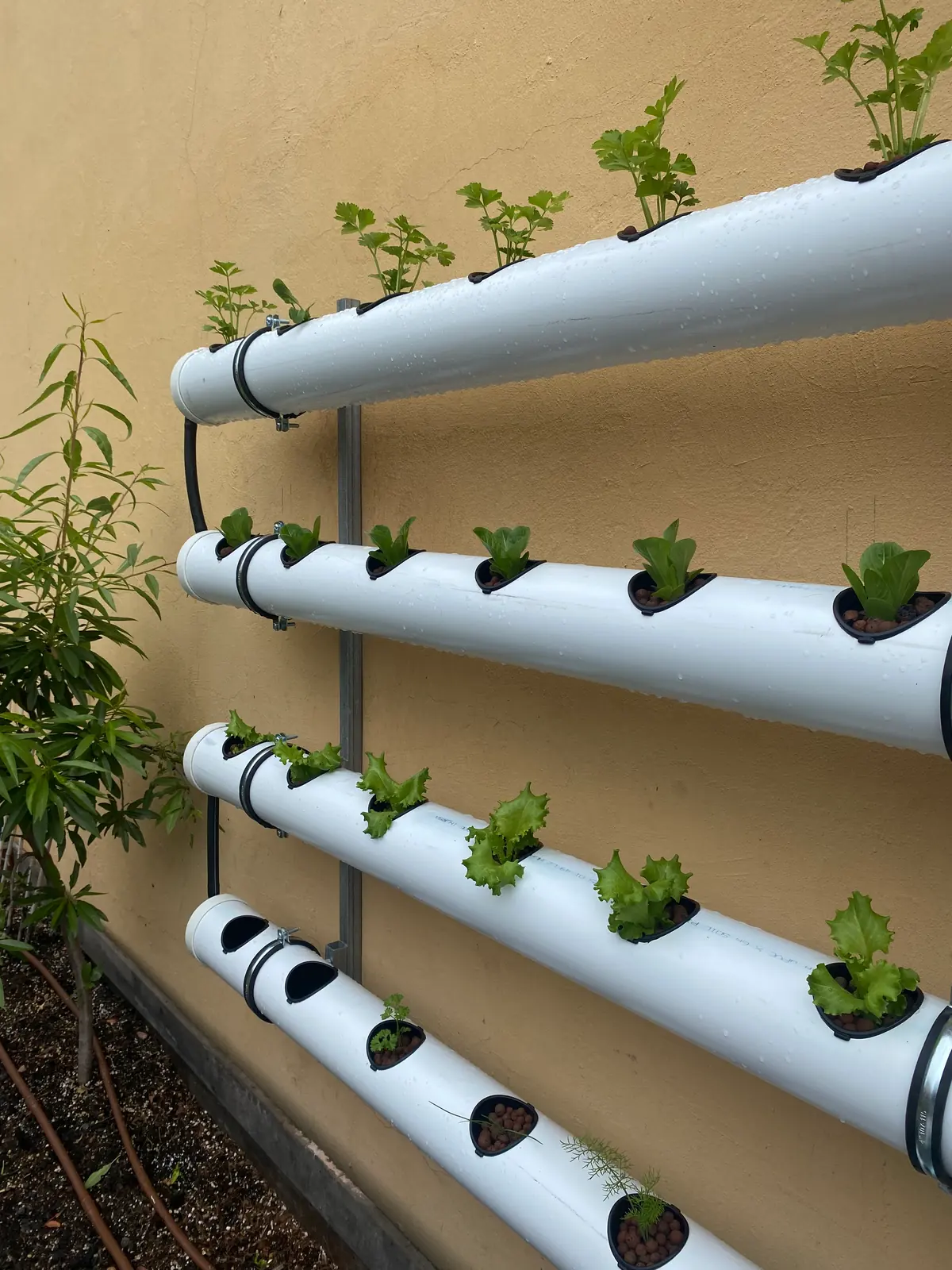
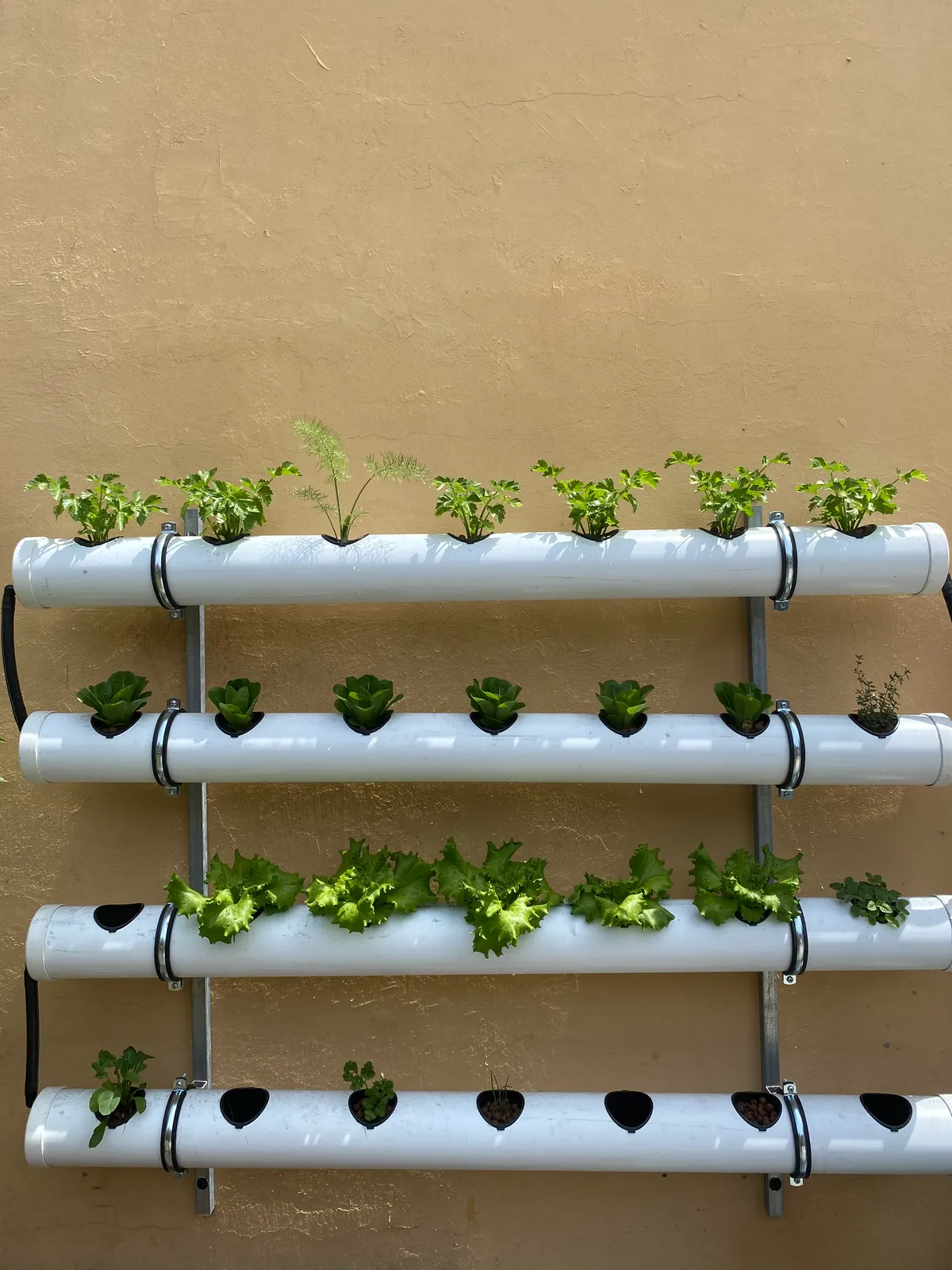
Every photo on this page is from the NFT system on our own yard wall in Cape Town: a half-size version of the Hydro Works Wall-Mounted NFT System, 1.5 m wide with four channels of seven plants. No stock images, nothing staged: the same wall, photographed as it grew.
Planting day, 21 October
The seedlings went into the channels as soon as their roots were showing through the plugs, following the steps in Planting Out: From Seed to Channel. A few LECA clay balls in each net cup keep the young plants upright; the roots do the rest.
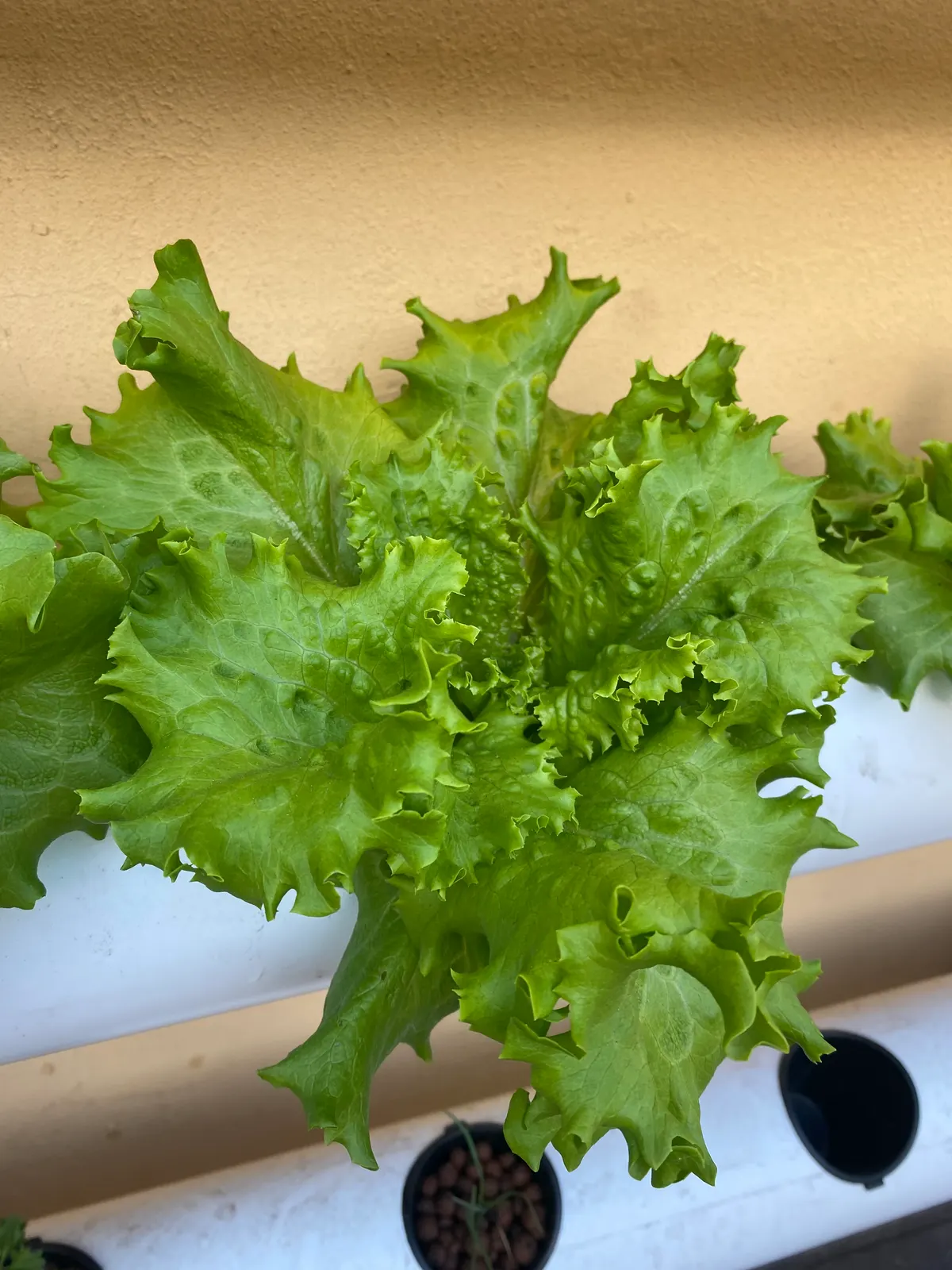
Ten days later
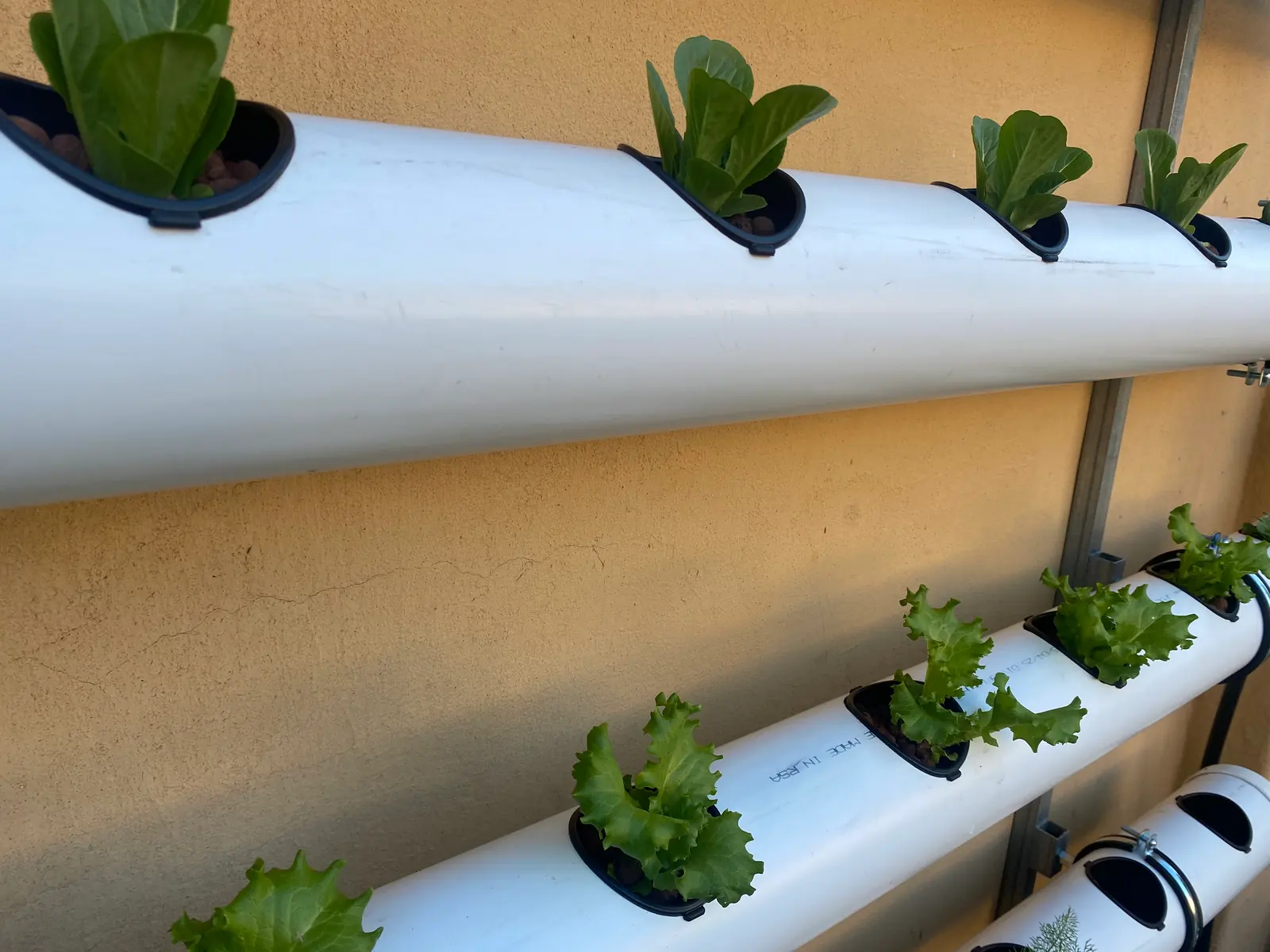
The first few days look like nothing is happening while the roots find the nutrient film. Then the plants take off. By the end of October the lettuce was filling the channels, and by early November the first heads were close to picking size.
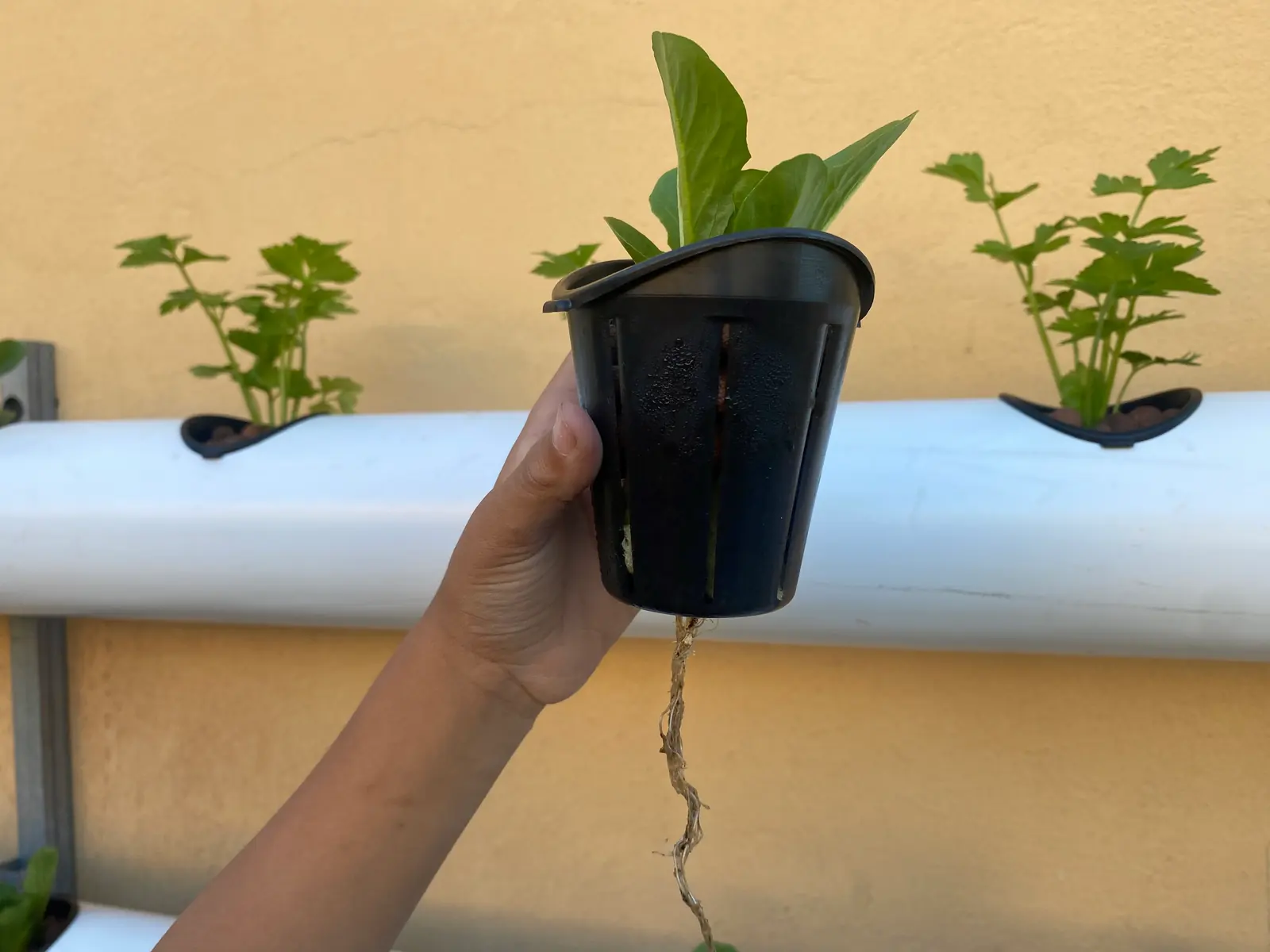
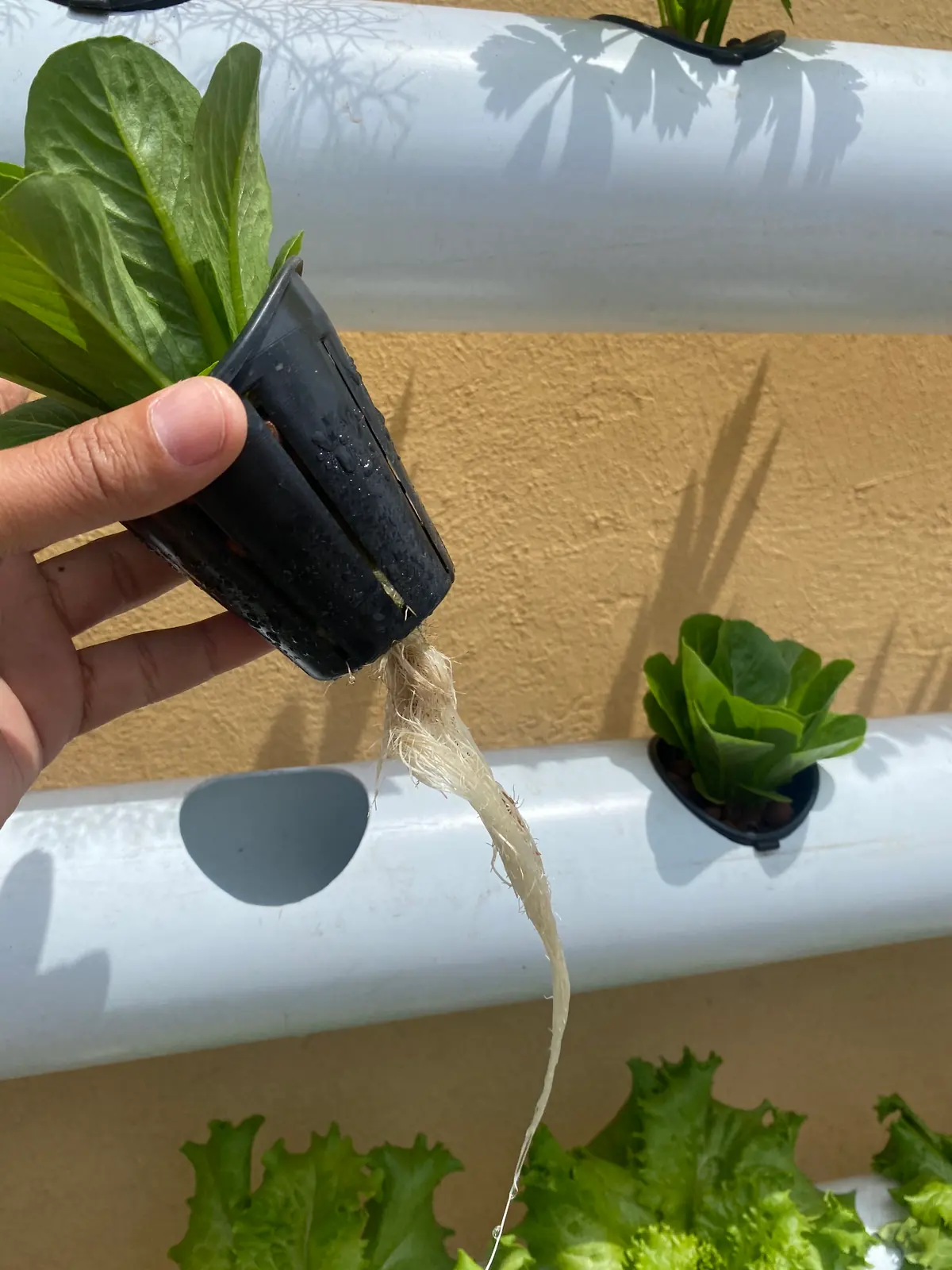
The roots tell you how it is going
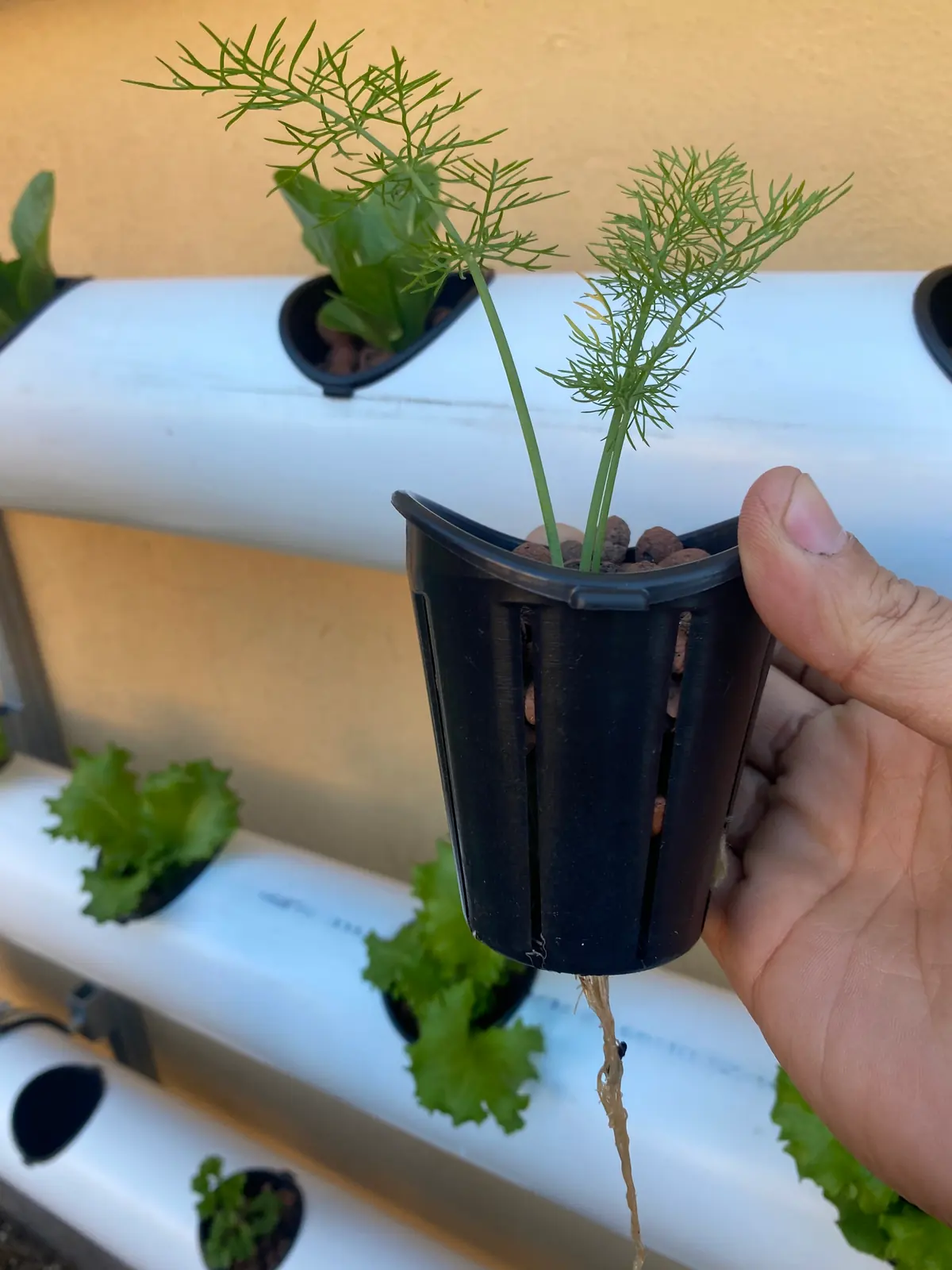
You cannot see roots in soil. In NFT you can lift a net pot and look, and it is the best health check there is. Healthy roots are white, firm and smell clean. Brown, slimy roots with a sour smell mean root rot: see Weekly Maintenance and Troubleshooting.
Celery and dill
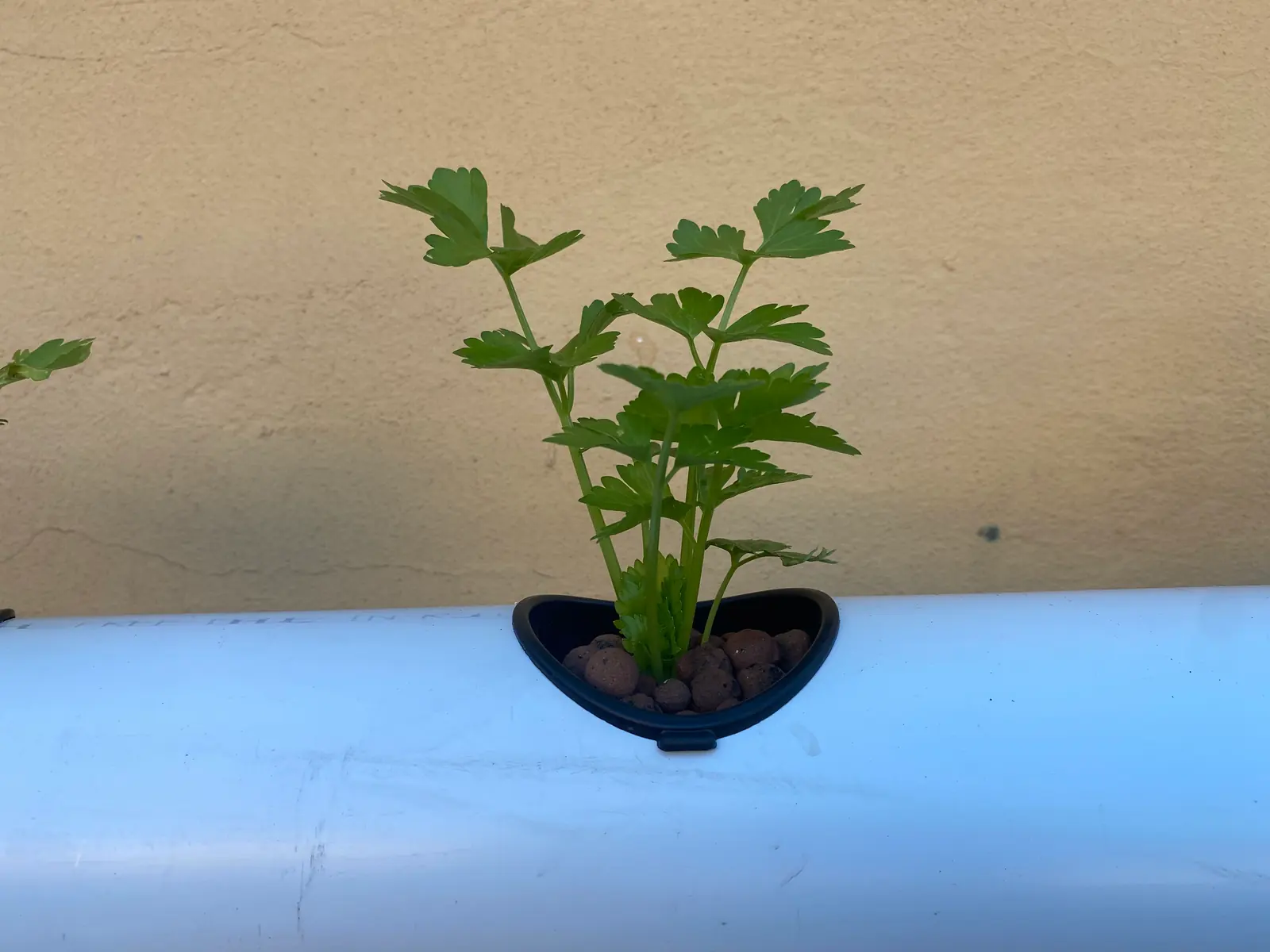
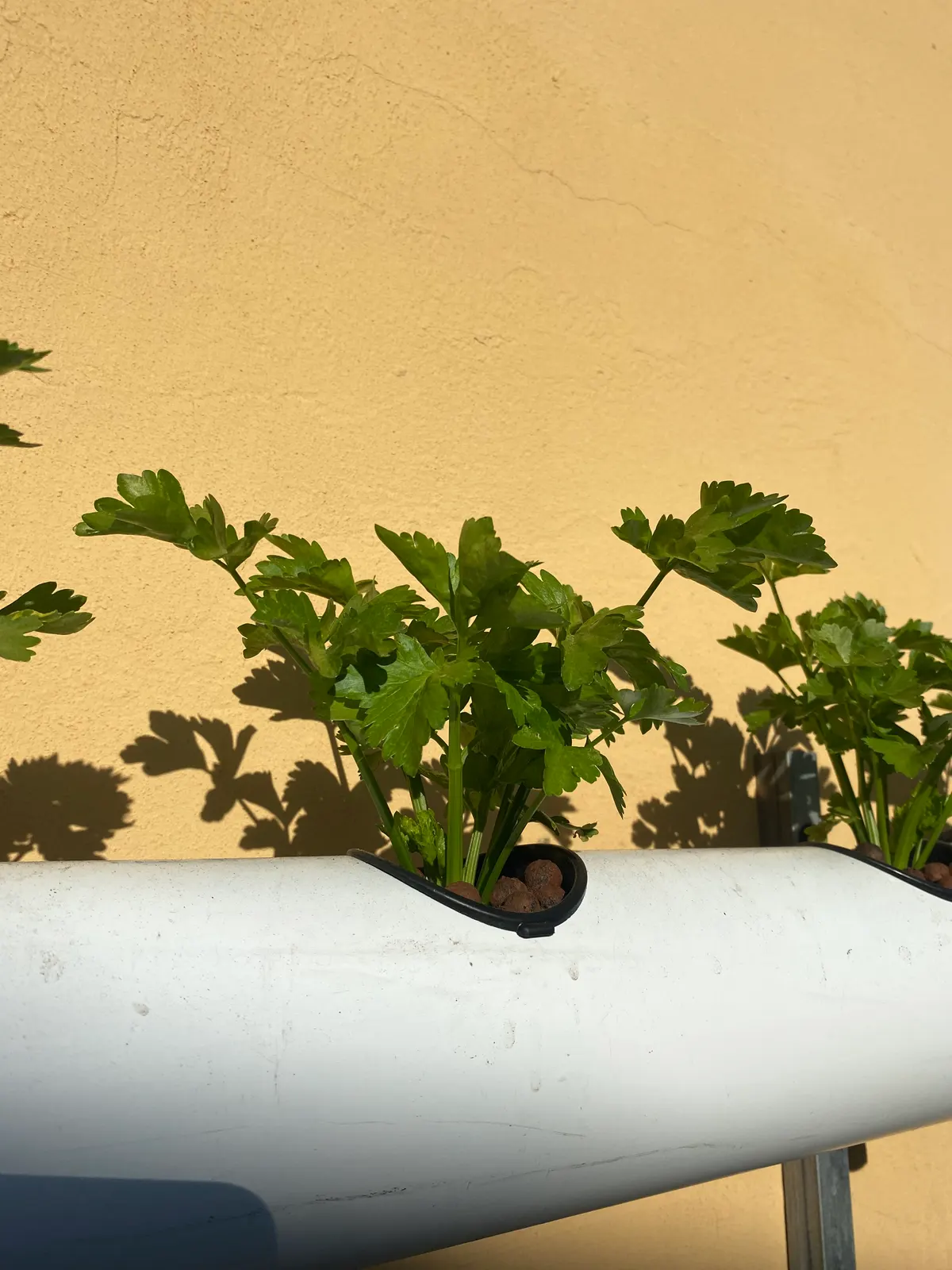
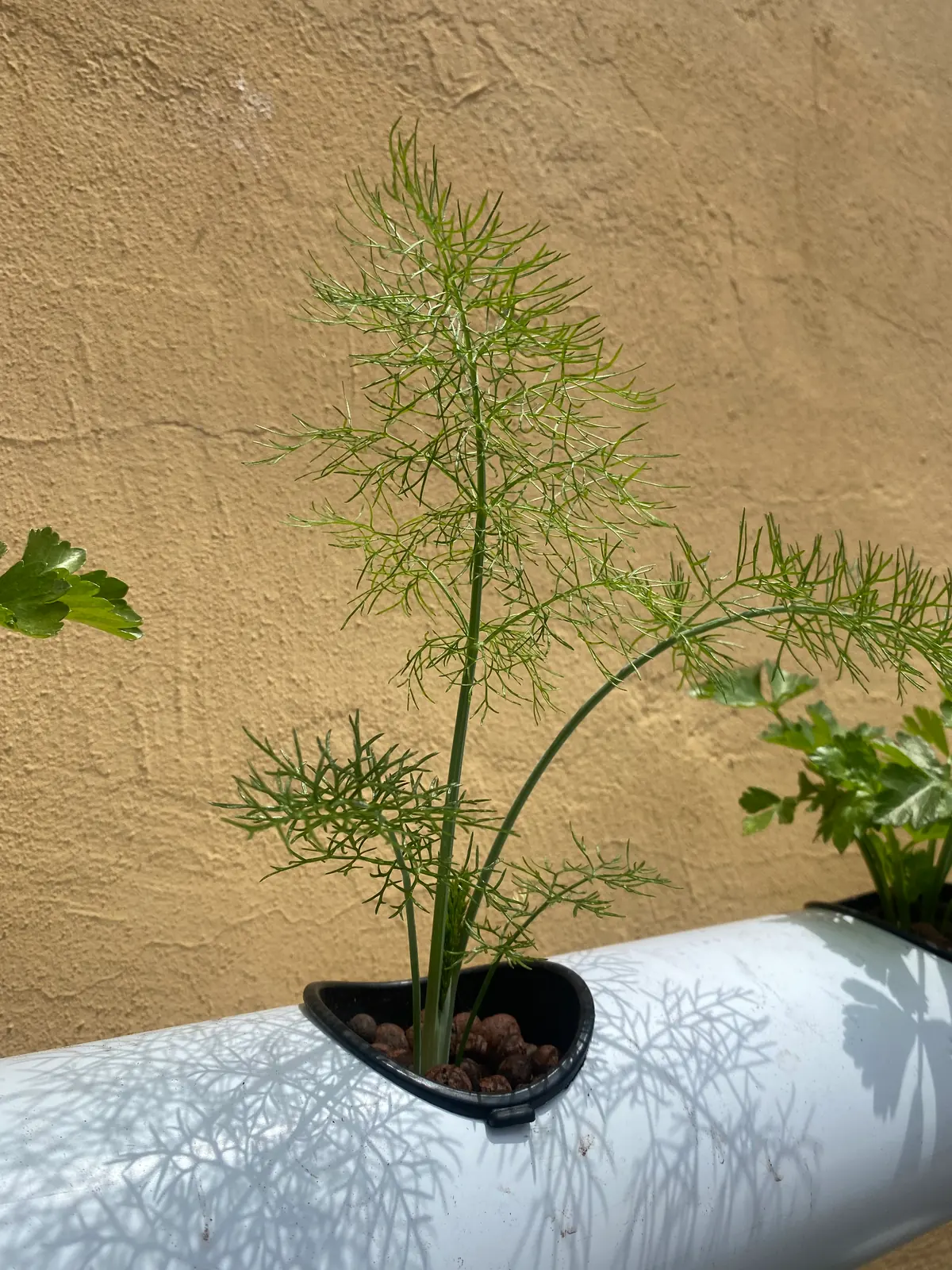
We grow herbs alongside the lettuce. Celery and dill have both done well in the channels.
One reservoir, different appetites
An NFT system has one reservoir, so every plant on it gets the same EC. Crops do not all want the same feed:
| Crop | EC (mS/cm) | pH | Notes |
|---|---|---|---|
| Lettuce | 1.2 – 1.8 | 5.8 – 6.2 | The easiest crop to learn a system on. |
| Celery | 1.8 – 2.4 | about 6.5 | The hungriest of the four. Expect slower growth at lettuce EC. |
| Dill | Grows well across a wide range | 5.0 – 6.0 | In trials, EC from 0.5 to 4.0 made little difference; light did. |
| Parsley | Grows well across a wide range | 5.0 – 6.0 | Same trial result as dill. Slow to start. |
Run the reservoir in the lettuce range when lettuce makes up most of the system. Dill and parsley will cope, and celery will grow, just more slowly than it would on its own feed.
Parsley: the one we are still working on
Parsley has struggled in our system. The research suggests EC is unlikely to be the cause, because parsley grew just as well at low and high EC in NFT trials. The usual suspects are:
- Light. In the same trials, more daily light made the difference, not more feed.
- Warm nutrient solution. Above about 24 °C the solution holds less oxygen and root rot becomes likely. A wall in full sun heats channels and reservoir fast.
- A slow start. Parsley is slow to germinate and slow to establish, so it is easily outgrown by lettuce next to it.
We will update this lesson with what works.
Sources
- Oklahoma State University Extension, Electrical Conductivity and pH Guide for Hydroponics (celery EC and pH).
- Walters, K.J. and Currey, C.J. (2019), Nutrient Solution Strength Does Not Interact with the Daily Light Integral to Affect Hydroponic Cilantro, Dill, and Parsley Growth, Agronomy 9(7): 389.
- Produce Grower, pH optima for hydroponic herb production (dill and parsley pH).
New to NFT? Start with NFT Hydroponics Explained, or see Setting Up the Hydro Works Wall-Mounted NFT System for the full-size, 3 m version.
Need the parts for this?
Find the parts in our store, add them to your cart and request a quote. Or ask us on WhatsApp.